Everything Must Go
I’ve been thinking about how I describe the Backrooms to people who haven’t heard of it, and I usually tell them it looks like an empty furniture store or office building, and how the Backrooms are a representation of liminal spaces which are so popular on the Internet right now.
Then I started thinking more about liminal spaces as a whole. I know I’ve typed a lot of sentences out for this blog where I say that it is easy to get trapped in one’s own memories, but I don’t think I touched on how it leads to the desire to be left behind.
Nostalgia is a cathartic experience which I argue we need from time to time. This helps us appreciate moments we may have been indifferent to while we were experiencing them. Nobody can convince me nostalgia doesn’t have benefits.
When nostalgia becomes a problem is when one gets so absorbed in the past, what they once had, or who they once were that they can’t focus on anything else. In the Backrooms movie, Clark behaves exactly like this.
Clark likes the Backrooms. He does not seem to be put off by them or the creatures inside, even when they kill his employees. Clark always remains curious throughout the film.
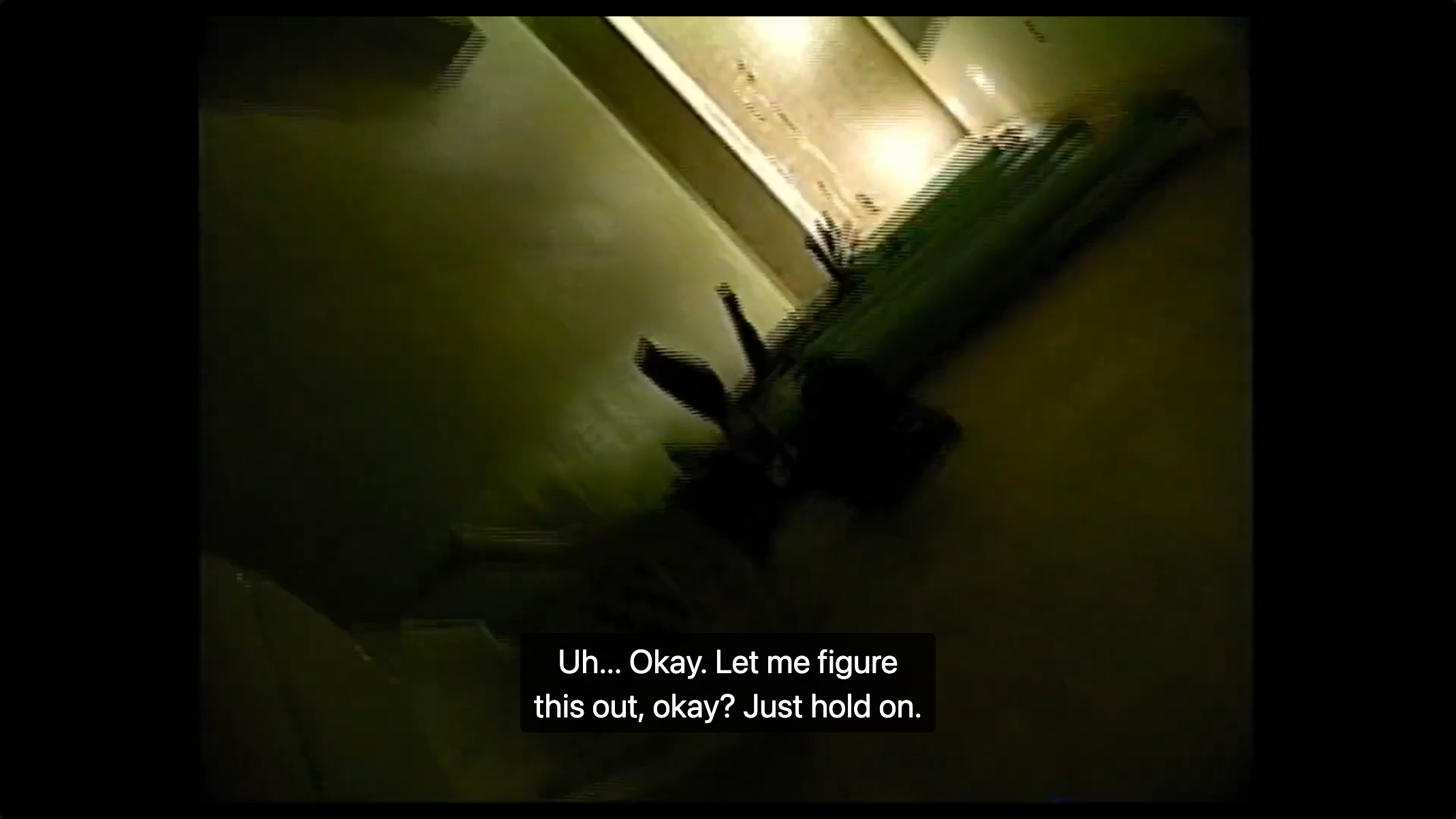
Clark remains surprisingly calm while his and Kat's lives are at risk.
The dots that don’t connect in Clark’s mind, however, are that the Backrooms can only change if people do. I still believe that the Backrooms are directly affected by people’s memories, which are constantly altered because human memory is like VHS tape generation loss: the more you remember something, the less you do.
When Clark made the conscious decision to change his memory of the night he left Barbara, he allowed his violent and controlling tendencies to completely take over. Then, he admits he does not want to change.
Clark wants the rest of the world to move on without him. He sees the Backrooms as “a big mess,” just like he is, so he believes he fits in. Unfortunately, Kane Parson’s Backrooms are much more nuanced than empty, spooky, nostalgic space that has monsters.
Clark’s “copy” or “Pirate Clark” as he is so often called has the same violent and controlling tendencies that human Clark does, and this is why Clark dies. He recounts the night he left Barbara with Mary one last time and behaves angrily. He likely has gone over this moment in his head over and over and says to Mary what he wishes he would have said to Barbara that night.
Clark’s behavior is unstable, immature, and selfish. The time he spent in the Backrooms has only given him time to think, to obsess over that single memory, to dig himself deeper into the “mess.”
All along, he wanted Mary to tell him that he was right and Barbara was wrong. He wanted to be validated for all of the sacrifices he made to pay for Barbara to go to school. I’m not entirely sure what all he sacrificed or how he came to own a furniture store, but in his mind (and that is what’s important here) he made a lot of sacrifices, and now, his life is stuck in this loop because it’s not just his attitudes and behaviors that he doesn’t want to change.
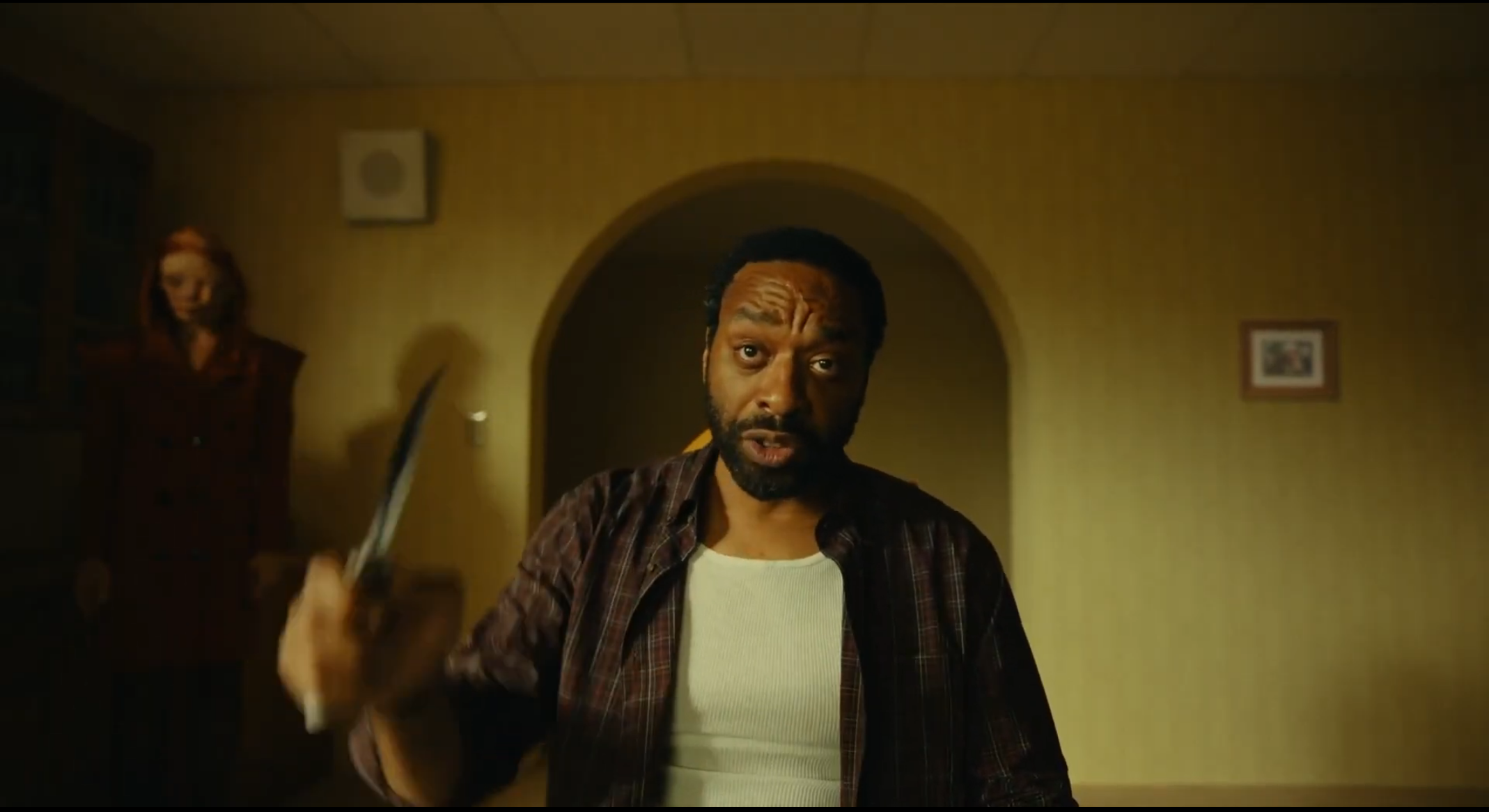
Clark's final argument.
Clark wants to be an architect, and I’m not sure how difficult it was to become an architect in 1990 when the movie takes place. However, I was always told growing up that if I want something, it is all up to me to make it happen. Nobody is going to do it for you. Clark must find some odd comfort in being stuck somewhere he doesn’t want to be, but the Backrooms brings him peace with all of that. He finally feels at home in the Backrooms, but he makes a big enough mistake to get himself killed.
Clark’s grave mistake is that he trusts the Backrooms by the time Mary finds him in there. He knows it’s messy, but other than that, he wasn’t a very good researcher.
Maybe that’s not fair for me to say. If I found myself in the Backrooms, I would be more focused on survival than understanding. But Clark went in there for research. He opened “the window within” himself, and did not realize Pirate Clark was more than a copy of his physical body–Pirate Clark was a manifestation of human Clark’s memories, thoughts, and attitudes, wearing his pirate costume to remind him of his shortcomings in the real world, and how that is all that’s waiting for him outside the Backrooms.
Which leads to Kane’s latest installment in his YouTube series, “Everything Must Go.” This title pertains to the signs in Captain Clark’s Ottoman Empire, which indicates that his store is closing, although there is no scene in the Backrooms movie or this video that comes right out and says it.
Once again, this leads Clark even further into the belief that his life on earth is a failure or pointless. If he lost the store, he would have nothing to hold over Barbara’s head in the fake arguments he has with Mary during his therapy sessions.
I am curious as to whether Clark continued to pay for Barbara to go to school after he left her. He seems to indicate that he does, but I’m not sure if it’s been confirmed.
Anyway, the way the Async researchers behave in “Everything Must Go” is similar to how Clark behaves in the movie. The researchers spend so much time focusing on measuring the “Everything Must Go” sign. They obsess over whether it’s different copies of different signs or copies of the same sign.
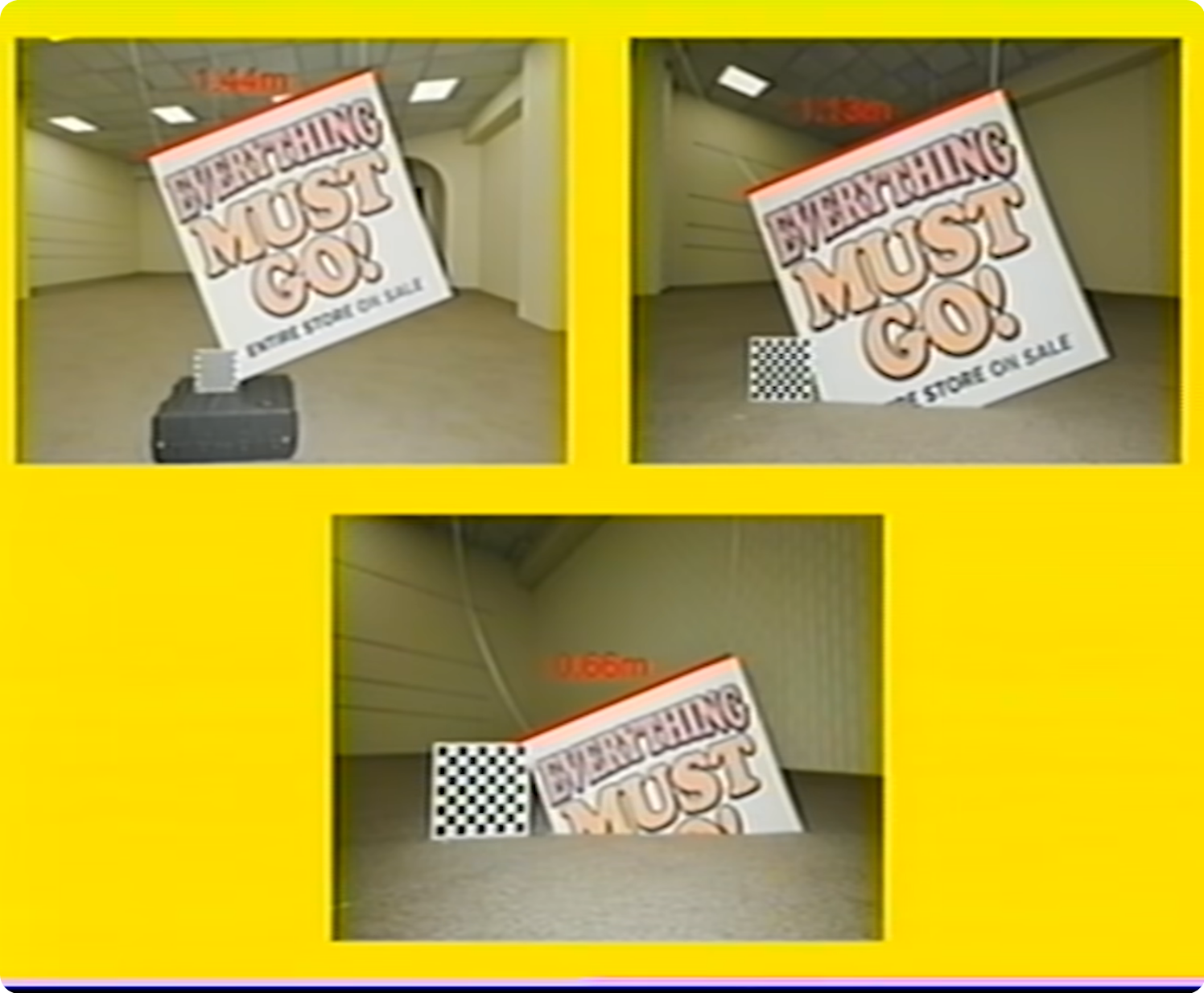
The researchers spend so much time measuring these signs.
One researcher keeps pushing for more exploration while the cameraman, Naren, wants to turn back. He feels uncomfortable, but Ron, another researcher, insists that it’s important they keep looking. This is what happened directly before the events of the opening scene of the Backrooms movie.
The researchers focus more on the signs, which, if they took a step back and looked at the bigger picture, aren’t entirely meaningful to what the Backrooms are. This is how the researcher in the movie, Phil, also behaves. He wants to find out just a little bit more. He believes there is nothing more important than the Backrooms, but there does not seem to be any true understanding.
I don’t think anyone is meant to understand the Backrooms; we are hardly even meant to see them. We are supposed to run from them, and yet everyone who enters gets sucked deeper and deeper into them. This is coming from someone who wants to understand Backrooms lore and what’s going on with them, but it won’t be fun anymore if I figure it all out and understand.
There is a correct interpretation of the Backrooms, Kane said it himself. But what I want you, reader, to take from this is that it’s not healthy to become so consumed in your mind and your memories that you’re indifferent to the world moving on without you. Everything must go. on.